
Choosing a carry-on backpack
How to pick a cabin-sized pack that fits the bag sizer, carries well, and opens the way you actually pack.
By FindGuides Editors · September 4, 2026 · 6 min read
A carry-on backpack has one job that a wheeled bag does not: it has to pass the sizer at the gate and still sit comfortably on your back for the walk to it. Those two demands pull in opposite directions, so the pack you want is the one that holds the most inside a shape the airline will wave through, and carries the weight without digging into your shoulders. Everything below is about judging that trade-off before you buy, not after.
Start by ignoring the word travel on the label. Plenty of hiking and commuter packs make better cabin bags than purpose-built travel ones, and plenty of travel packs are too deep to board. What matters is the measured shape, the way it opens, and how it rides when it is full.
Start with the number that actually binds you
Cabin allowances are not standard. A pack that boards one airline free can be gate-checked or charged on the next. Full-service carriers often allow something near 55 by 40 by 20 centimetres, while low-cost airlines frequently enforce a smaller free bag closer to 40 by 20 by 25 centimetres and sell the larger size as an add-on. Before you shop, find the smallest limit among the airlines you fly most and treat that as your ceiling. A soft pack can squash a little, but depth is the dimension that catches people out, because a backpack bulges outward when it is full and a 20 centimetre sizer slot does not care how good the fabric is.
How a bag gets measured
Airlines measure the longest points in three directions, including wheels, handles, straps and any external pockets. Manufacturers usually quote the panel size, which is smaller. Measure the pack yourself when it is packed, not empty, and press a ruler flat against the back panel and the fullest part of the front. If a pack has a stretchy front pocket, assume you will not be allowed to stuff it. The honest test is whether the loaded bag drops into a rectangular box of your target size without forcing.
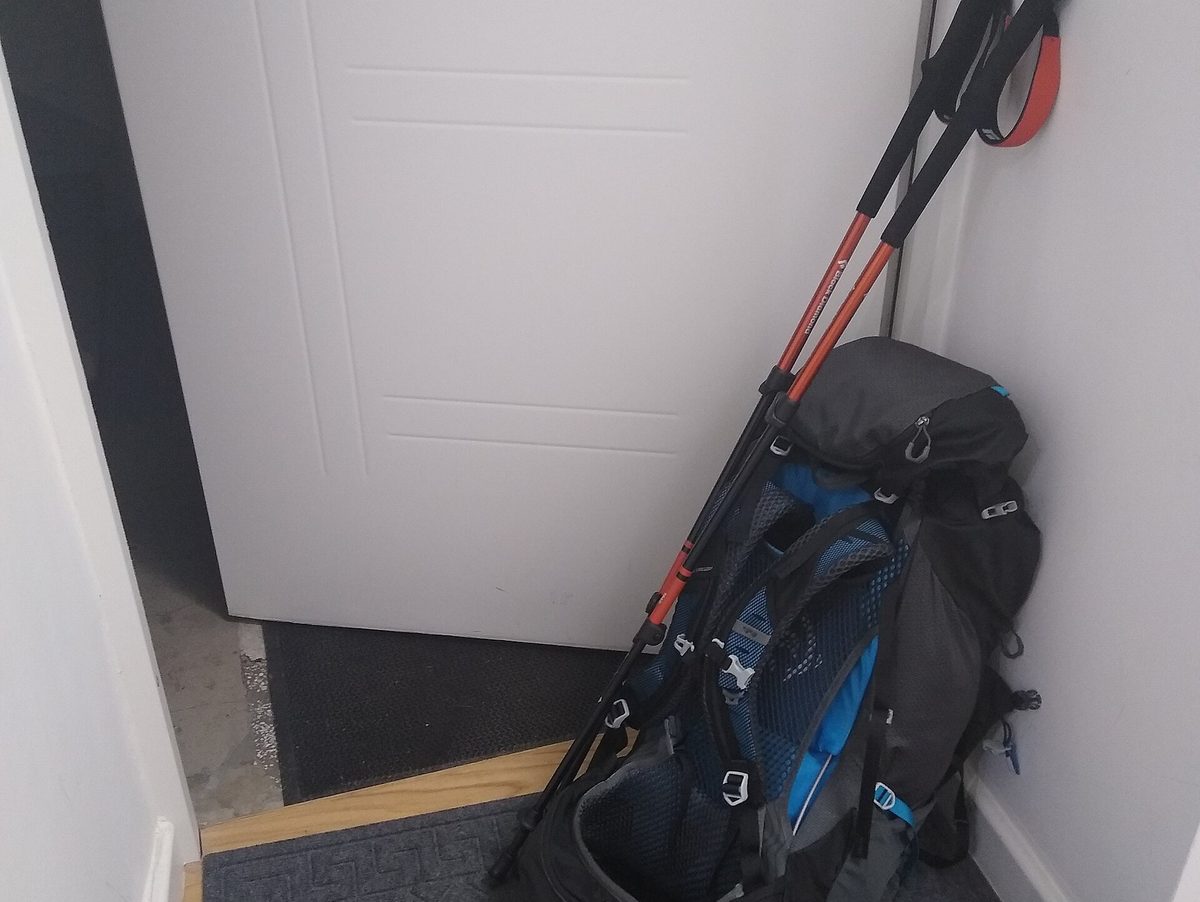
Carry comfort decides how far you will take it
A cabin bag is small, but fully packed it can still weigh eight to ten kilograms, and you may carry it across terminals, up stairs, and through a town before you reach a bed. Look for shoulder straps with real foam and a shape that curves around the collarbone, a sternum strap to stop the straps sliding outward, and a hip belt that transfers weight to your hips rather than leaving it all on your shoulders. On larger cabin packs a load-lifter strap near the top of the shoulder pulls the weight closer to your spine, which makes a heavy bag feel lighter and more stable. If a pack only has thin webbing straps, it will punish a long walk no matter how clever the storage is.
How it opens changes how you pack
The single biggest usability difference between travel packs is the opening style. A top-loading pack, like most hiking rucksacks, makes you dig for anything at the bottom. A panel or clamshell pack unzips like a suitcase so you see everything at once and can use packing cubes in neat layers. For moving between places every few days, clamshell access saves more frustration than any pocket layout.
| Opening style | How it feels | Best for |
|---|---|---|
| Top-loading | Deep single tube, dig to the bottom | Simple trips, one base, light packers |
| Panel / front zip | Zips open to the main compartment | Frequent repacking, mixed clothing |
| Full clamshell | Opens flat into two halves like a case | Packing cubes and city-to-city travel |
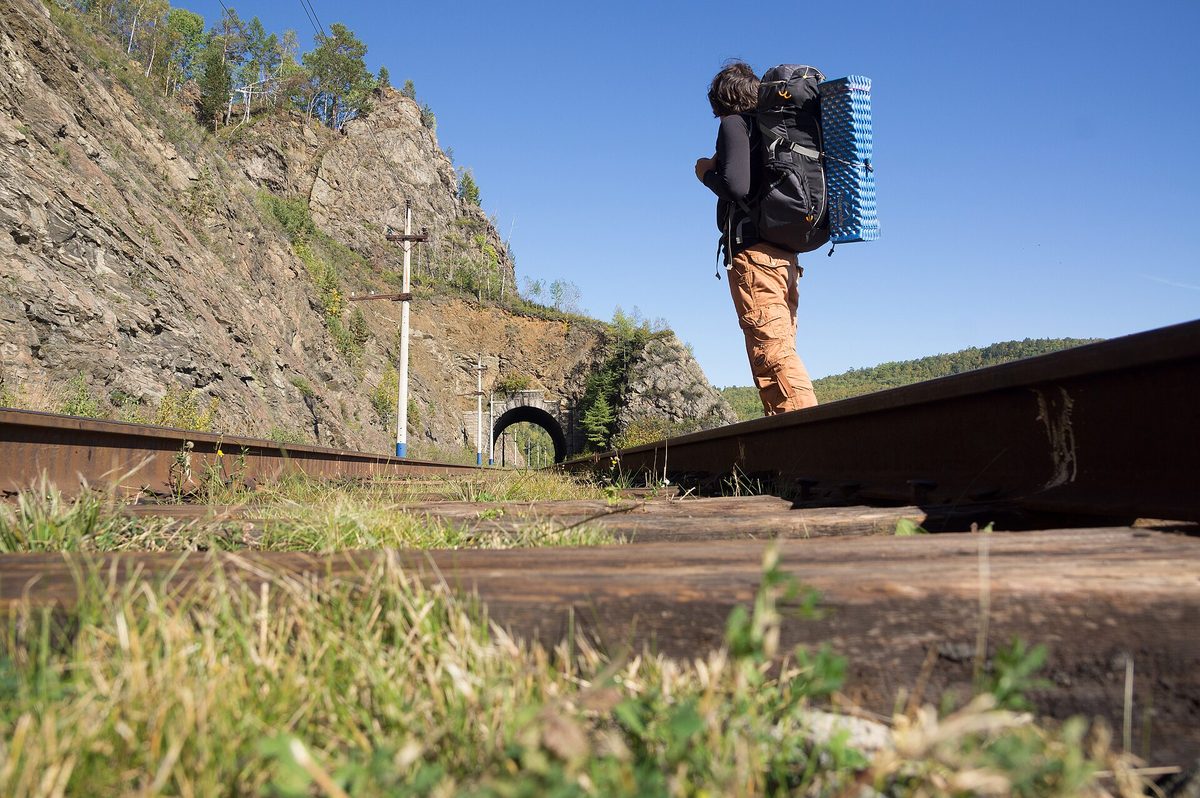
Materials, zips and the parts that fail first
Fabric weight is quoted in denier, and a higher number usually means a thicker, more abrasion-resistant yarn. It is a rough guide, not a quality score, because weave and coating matter as much as the figure. Pay more attention to the parts that actually break. Zips carry the hardest life in a bag, so look for chunky coil zips with sturdy pulls, and lockable sliders on the main compartment if you want to clip the two together. Check that high-stress points, where straps meet the body, are bar-tacked or reinforced. A water-resistant coating and a storm flap over the zip keep a shower out, but no everyday pack is fully waterproof, so pack anything delicate in a dry bag inside.
A quick buying checklist
- Confirm the loaded pack fits your strictest airline's cabin size, depth included.
- Choose panel or clamshell access if you repack often.
- Insist on a padded hip belt and sternum strap for anything over about 30 litres.
- Try it loaded with real weight, not empty, in the shop or at home before the trip.
- Inspect the zips, bar-tacking and back panel, and skip the bag if the hardware feels flimsy.
Buy the smallest pack that fits the way you travel rather than the largest that still boards. A slightly smaller bag forces lighter packing, clears every sizer without a second thought, and is easier to lift into an overhead bin. If you are between two sizes, pack a weekend's clothes into each in the shop and carry them for a few minutes. The one you forget you are wearing is the one to take home.
Photo credits. Photo: Krzysztof Popławski / Wikimedia Commons, CC BY 4.0. Photo: SGrabarczuk (WMF) / Wikimedia Commons, CC BY-SA 4.0. Photo: Vyacheslav Argenberg / Wikimedia Commons, CC BY 4.0.
More in Travel
- TravelPacking a toiletry kit for airport securityHow the carry-on liquids rule works, what counts as a liquid, and simple ways to pack so you clear the scanner quickly.
- TravelPicking a universal travel adapterPlug shapes, voltage, and the difference between an adapter, a converter and a transformer, so you charge safely abroad.
- TravelHow to use packing cubesA simple system for turning a bag of loose clothes into tidy blocks you can find, repack, and fit more of.